
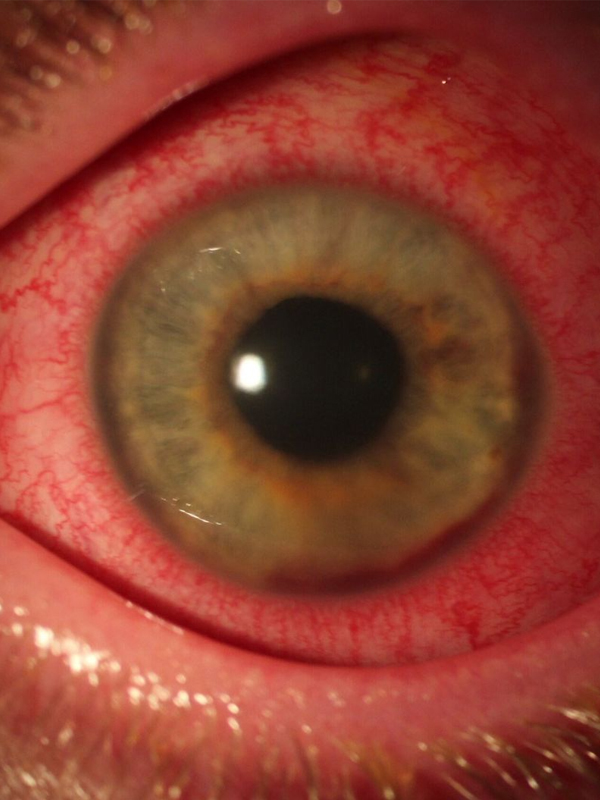
Uveitis is a form of eye inflammation that affects the middle layer of tissue in the eye, called the uvea. It can cause redness, pain, blurred vision and floaters.
Uveitis (u-vee-I-tis) warning signs often come on suddenly and get worse quickly. The condition can affect one or both eyes, and it can affect people of all ages, even children.
Possible causes of uveitis are infection, injury, or an autoimmune or inflammatory disease. Many times, a cause can't be identified.
Uveitis can be serious, leading to permanent vision loss. Early diagnosis and treatment are important to prevent complications and save your vision.
Symptoms may come on suddenly and get worse quickly. Though in some cases, they develop gradually. They may affect one or both eyes. Sometimes, there are no symptoms, and signs of uveitis are found on a routine eye exam.
The uvea is the middle layer of tissue in the wall of the eye. This layer of tissue includes the iris, the ciliary body and the choroid. When you look at your eye in the mirror, you will see the white part of the eye, called the sclera, and the colored part of the eye, called the iris.
The iris is located inside the front of the eye. The ciliary body is a structure behind the iris. The choroid is a layer of blood vessels between the retina and the sclera. The retina lines the inside of the back of the eye, like wallpaper. The inside of the back of the eye is filled with a gel-like liquid called vitreous.