
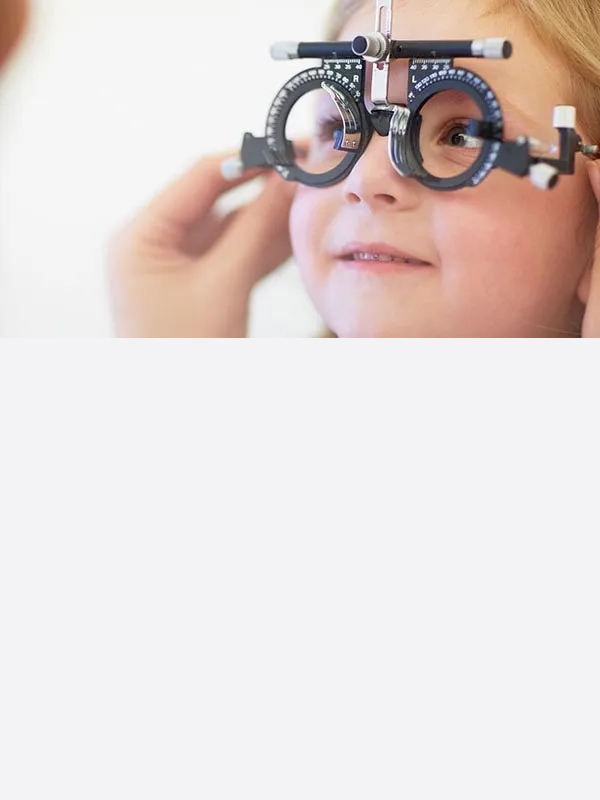
Paediatric ophthalmology is the specialty focused on children's eye health, with squint (strabismus) being a common condition treated by these specialists. A squint occurs when the eyes are not aligned and do not work together to focus on a single point, which can affect vision development, depth perception, and confidence in children. Treatment varies depending on the cause and severity but can include corrective lenses, eye exercises, vision therapy, or surgery to correct eye muscle imbalances.
Strabismus, or pediatric ophthalmology squint, is a disorder in which the eyes do not align in the same direction. It is known as “cross eyes” in common parlance.
This misalignment of the eye can be further categorized into Inward turning (esotropia), Outward turning (exotropia), Upward turning (hypertropia), and Downward turning (hypotropia).
The inability of six different muscles in the eye to work in coordination with one another is what causes Strabismus. The condition results in two different images being sent to the brain, leading to confusion. Often, the weaker image is ignored, becoming a learned trait. The eye responsible for sending the weaker image will lose its ability to perceive, resulting in amblyopia or lazy eye.